

If you stopped paying Google today, would your business still exist tomorrow?
It is an uncomfortable question. But for many companies relying strictly on an “Ads-Only” strategy, the answer is a hard “No.”
At Redot Global, we audit dozens of businesses every month. We see a recurring pattern: companies with impressive revenue numbers but fragile foundations. They are addicted to the instant gratification of Paid Search (PPC).
While Google Ads are a powerful tool for immediate revenue, they have a fatal flaw for long-term growth: You are renting your visibility.
The moment you stop paying the landlord (Google), your traffic evaporates. You build no equity, no authority, and no permanent footprint.
Smart CEOs understand that to increase company valuation, you need to own your market, not just rent it. Here is why the most profitable companies in Singapore are shifting their focus from “Lead Buying” to “Asset Building.”
The “Rental” Trap: Why Ads Get More Expensive Every Year
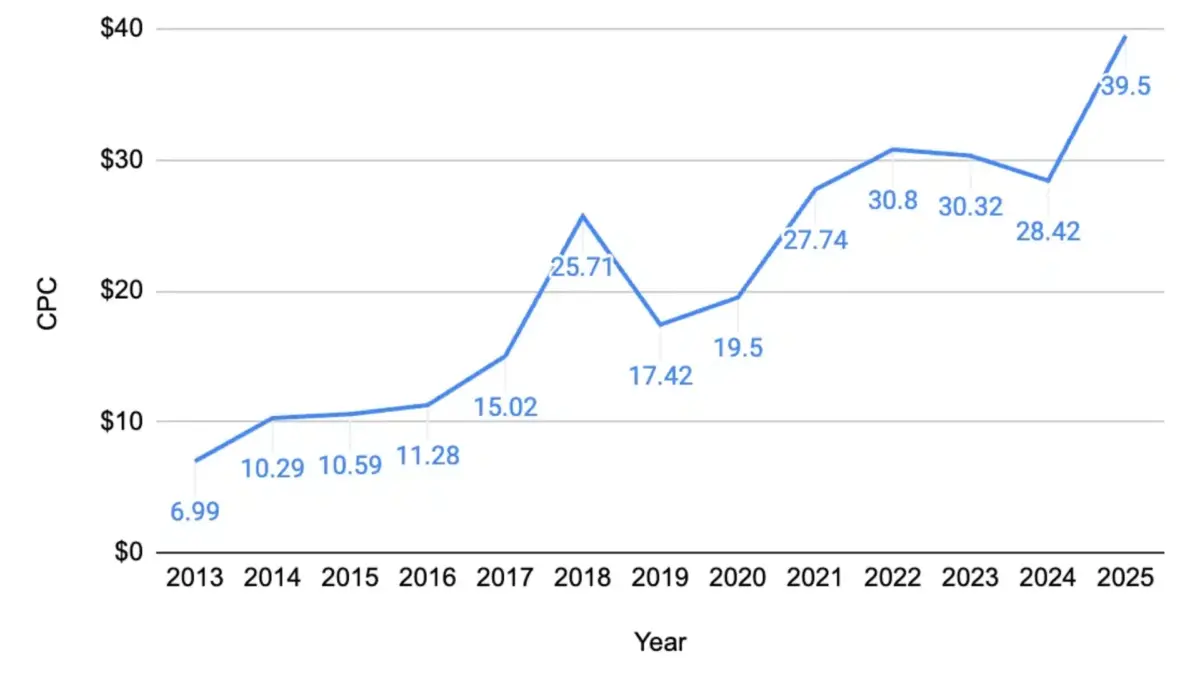
Imagine renting an office where the landlord raises the rent by 15% every single year. You would eventually move out and buy your own building, right?
In the digital marketing world, this is called CPC Inflation. According to industry data from sources like WordStream, average Cost Per Click (CPC) has risen significantly year-over-year across most major industries.
As more competitors enter your niche, the cost to bid on high-intent keywords like “Best Custom Software Singapore” or “Fintech Solutions” goes up.
Real-World Scenario: The “Startup” Curve
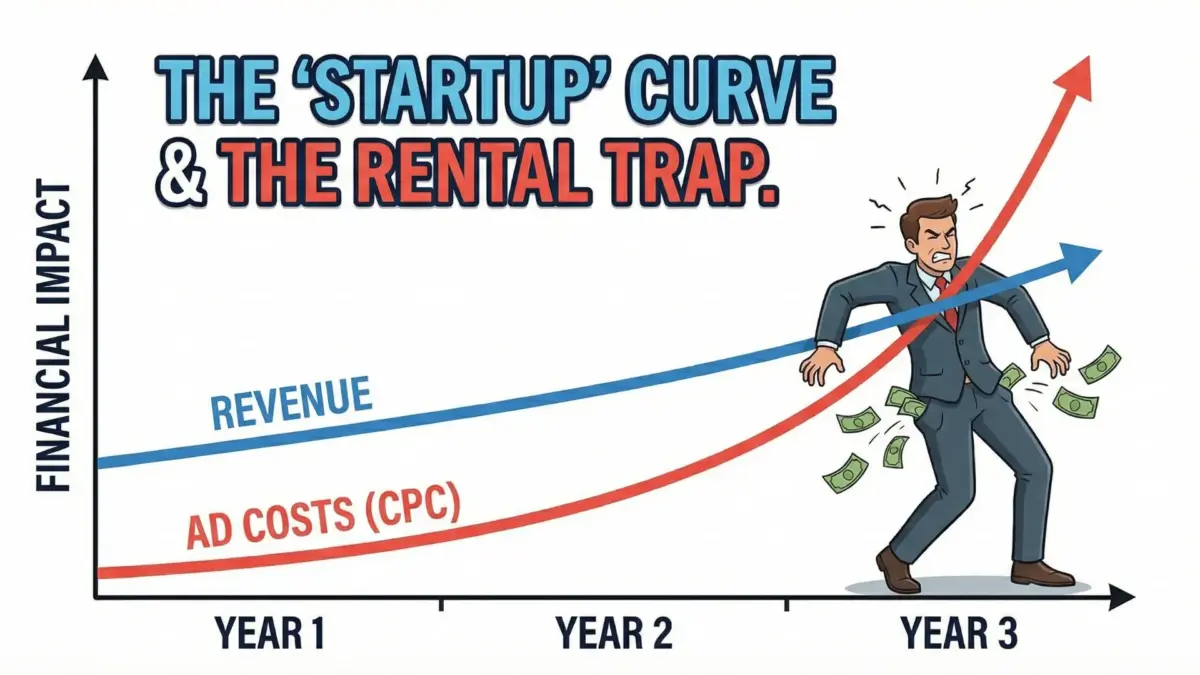
We typically see this happen with e-commerce clients.
- Year 1: They spend $1 to make $5. Life is good.
- Year 2: Competitors notice their success and start bidding on the same keywords. Now they spend $2 to make $5.
- Year 3: The market is saturated. They are spending $4 to make $5.
If you rely 100% on ads, your profit margins effectively shrink every year. You are running faster just to stay in the same place.
The Secret Link: How Ignoring SEO Hurts Your Ad Performance
Here is the industry secret that many “Ads-Only” agencies won’t tell you because they just want to manage your spend:
If your SEO is bad, your Ads cost more.
Google uses a metric called Quality Score to decide how much you pay per click. It looks at your landing page experience, site speed, and content relevance—all factors that SEO fixes.
The “Inefficiency Tax” (An Example)
Let’s say two companies, Company A and Company B, are bidding on the same keyword: “Enterprise ERP Solutions.”
- Company A (Ads Only): They have a slow website, thin content, and no SEO strategy.
- Google Quality Score: 3/10
- Cost Per Click: $15.00 (approx. SGD 20.00)
- Company B (Redot Global Hybrid Strategy): They run ads, but they also have optimized landing pages, fast load times, and high-authority blog content.
- Google Quality Score: 9/10
- Cost Per Click: $9.50 (approx. SGD 12.50)
Company A is paying a 57% “tax” on every single click simply because they ignored SEO. Over a year, that is tens of thousands of dollars wasted.
SEO is Real Estate: The “Asset” Mindset
Search Engine Optimization (SEO) is often misunderstood. Many clients view it as “magic keywords.” At Redot Global, we view SEO as Digital Real Estate.
When you invest in high-quality content, technical site speed, and domain authority, you are building a permanent asset.
Why “Evergreen” Content Matters
We have clients who wrote detailed guide articles (e.g., “How to Choose the Right Cloud Server”) three years ago.
- That single article still ranks #1 on Google.
- It brings in 500 qualified visitors a month.
- Cost per click: $0.
If they tried to buy those 500 visitors via Google Ads today, it might cost them SGD 2,500/month. That article is an asset that pays dividends every single month, without a monthly invoice.
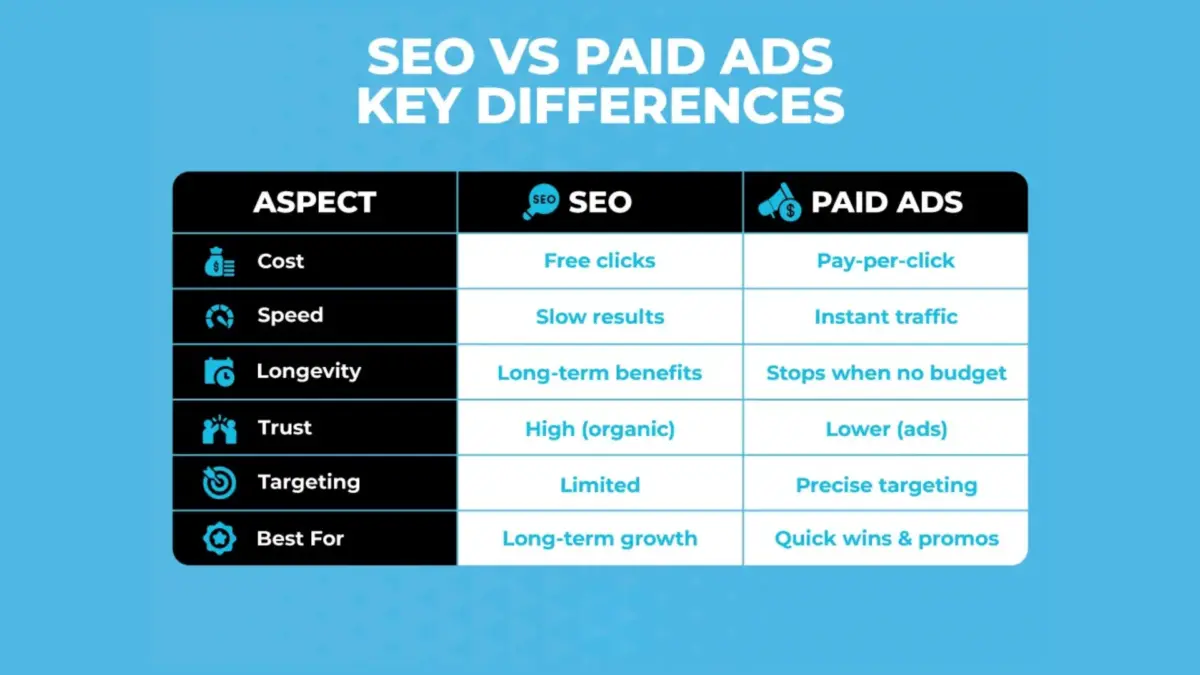
This is the difference between an expense and an investment. Ads are an expense on your P&L. A high-ranking organic website is an asset on your balance sheet.
The Redot Perspective: You Need Both, But in the Right Order
We are a full-service agency. We manage successful Google Ad campaigns for clients globally. We are not saying “Ads are bad.”
We are saying that Ads are a bridge, not a destination.
The winning strategy we implement for high-growth clients looks like this:
- Phase 1 (The Sprint): We turn on Google Ads to get immediate cash flow, test keywords, and gather data on what converts.
- Phase 2 (The Investment): We take the insights from the Ads (e.g., “People are searching for ‘Scalable AWS Solutions'”) and use that data to build deep, authoritative SEO content.
- Phase 3 (The Crossover): Over 12–18 months, your organic traffic begins to match your paid traffic.
- Phase 4 (Freedom): Eventually, you can dial back your ad spend without losing leads. Your Cost Per Acquisition(CPA) drops, and your profit margins explode.
Conclusion: Stop Paying the Toll
You wouldn’t build a factory on land you lease on a day-to-day contract. Why build your digital revenue stream on one?
It is time to move from a strategy of dependency to a strategy of dominance.
Is your website an asset, or just a billboard?
At Redot Global, we specialize in building digital ecosystems that last. From custom software to high-level SEO strategy, we help businesses own their future.

Head of Digital Marketing, Redot Global
Kasun Asiri is a Digital Marketing Strategist with over 15 years of experience delivering high-impact digital growth initiatives across global markets. At Redot Global, he plays a key role in planning and executing performance-driven campaigns for international brands, consistently achieving measurable results through advanced SEO, Google Ads, and integrated digital visibility strategies. With deep expertise at the intersection of marketing, technology, and data, he specialises in building scalable growth systems powered by data science and AI-driven automation, transforming traditional marketing into efficient, data-driven frameworks designed to drive sustainable business growth. His work is defined by analytical thinking, strategic execution, and a commitment to delivering performance-focused solutions that align with business goals and long-term success.